
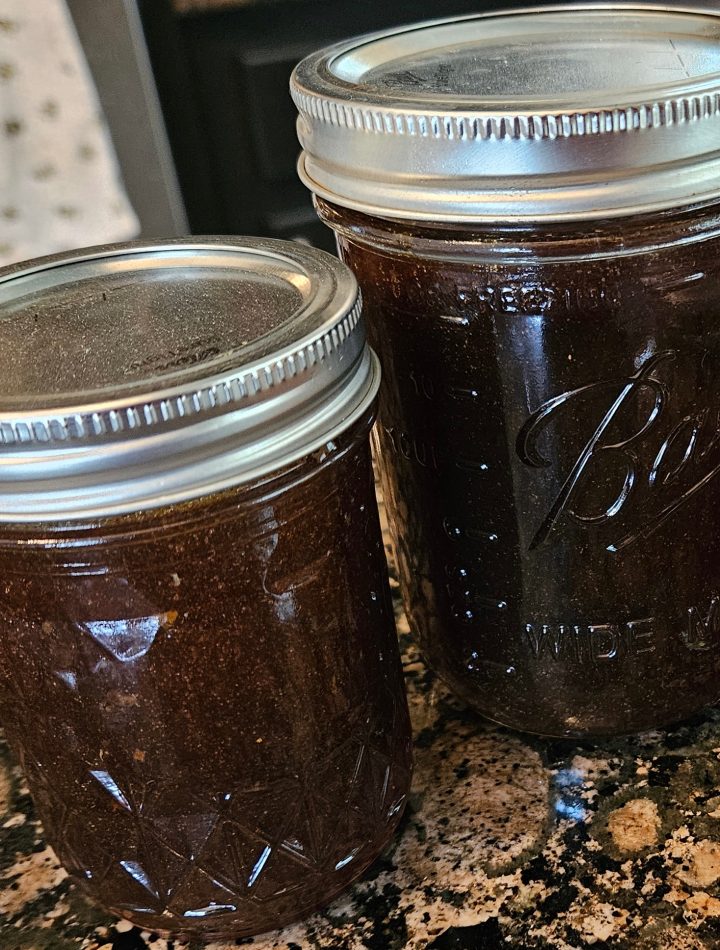
I love a spoonful of honey in my tea, drizzled on a bowl of yogurt, or spread on buttered toast. One of my favorite desserts is baklava oozing with honey (pistachio or walnut, both are delicous). I have picked up souvenir jars of honey from gift shops in cute locales we’ve visited over the years. When I eat it, I can recall the pleasant memories of that trip. Those gift shop honeys are never a bargain, curated specialties marked up for the impulse purchases of tourists. But I have never spent as much on honey as I did a few months ago – seven hundred dollars.
We have big picture windows in the gameroom upstairs with a view of the oak trees in the front yard. I keep them mostly covered with sheer curtains for privacy. Though our tiny dog can spend hours staring out of those windows at the street and take note of every dog out for a walk, I rarely peek out of those windows. So it came as a huge surprise in December when we were playing a game with friends in that room and someone mentioned seeing a few bees in the window.

I took a close look. Yes, more than a few bees, perhaps half a dozen, clearly making a beeline for the upper corner of the wall where it meets the roof. As I watched, they came and went like cars on a country road, speeding past one another in opposite directions and then flying off into the distance. They looked very purposeful, busy building a hive inside the wall or the attic, perhaps mere feet from where I was standing. I felt a panic rising and glanced over at the trapdoor that leads up into the attic, wondering if bees would come pouring into the room if it were opened.
We paused our game and investigated. We were soon met with relief to hear no buzzing when we listened at the trapdoor, and no sign of any bees in the upstairs rooms. We relaxed and finished our game, and the next day my top priority was getting someone to deal with our tiny invaders. Bees are busy little pollinators, essential to the harvest of so many of the fruits and vegetables we eat (thank you bees for all the strawberries!) I definitely did not want them to come to any harm. I made some calls; there seemed to be multiple companies who were eager to take my money but were vague on what exactly they would do to solve the problem. One even said they would remove the bees and just leave a big hole in the side of the house; we’d have to hire someone else to deal with fixing whatever damage they may cause.
After two days and several disappointing conversations, I found the help we needed. Texas Honeybee Rescuers has extensive experience removing honeybees from homes as well as the carpentry skills to put things back together when they are done. I got them on the phone and sent them a few photos – it was tough to get photos with the busy bees moving so quickly! But after a dozen tries I got a few images, and they were able to see that these were definitely honeybees and not some other variety.

Did I mention it was mid-December? They were booked solid and then out of town for Christmas, so we scheduled for close to New Year’s. They explained that the bees probably moved in during the summer when hives are more likely to move around, and they might have been building a hive for months. They outlined the plan, including removing all the bees to rehome in a suitable location far from here, and a 3 year warranty in case of any issue. We agreed and set the date.
Leo with Texas Honeybee Rescuers arrived early on New Years Eve. He unloaded a specially outfitted bee vaccuum collection device and got geared up in a protective suit. We watched from the safety of the indoors while he ascended the extension ladder and began vaccuuming up bees. Then he carefully opened up the underside of the eaves. The bees had built their hive attached to the roof and the crossbeams, and it was impressively large! They must have been building for months while we were completely unaware.


Leo carefully took the time to collect all the bees and whatever portion of the hive they needed to take with them. I thought he might take the entire hive away, but we got a surprise knock on the door: grab a big plate, we got honey! He handed us two big combs we quickly placed on a platter.

Then we sampled our extremely local honey while Leo cleaned up outside, closed up the hole, painted and sealed. He added a special beeproof coating to deter any return visitors. His last step was to venture up into the attic to make certain there were no surprises. Though several bees found their way inside during the process that day (how did they get in?) we breathed a sigh of relief when he opened the attic trapdoor and nothing emerged.
We thanked Leo profusely for all his excellent work, and he told us he had found a home for the bees, a farm not too far away. He gave us a final word of advice; it’s impossible to round up every last bee, so just take care as we would see a few stragglers over the next couple of days. Maybe wait before doing any gardening just under where the hive used to be.
Texas Honeybee Rescuers departed, driving slowly away with the large canister of bees safely stowed. Over the next two days we had a few stragglers, perhaps a dozen bees that somehow got into the house, determined to find their hive that had moved away. We could not see where they were getting in; there must be the tiniest crevice. Fortunately they were subdued rather than vengeful, seeming dejected they missed the bus out of town with their hive.
I kept the honeycomb in an airtight container, unsure how to remove the honey from it. We spooned the bits that dripped out into our tea, its dark rich flavor having many more layers than the typical storebought stuff. Honey is affected by the plants the bees visit; I’ve tasted mild clover honey and rich wildflower honey as well as unpleasant “medicinal” honeys from bees that visited strongly-scented herbs. Our honey is complex, definitely the product of a wide variety of flowering plants in the neighborhood around us.
We ate small spoonfulls of honey until no more could be easily scooped out of the comb, and then left it in the pantry for several months. I’ve read about honey found in ancient tombs that was still edible, so I figured there was no rush to figure this out. Months later in midsummer I did a bit of research online and found it was actually quite simple to extract the honey at home:
- Warm up the honey slightly; setting it outside in the broiling summer sun for an hour would do the trick. (Make certain it’s tightly covered though, or I’ll get a brand new bee problem.)
- Have a large clean bowl ready along with a potato masher and a couple of mason jars to hold the honey. Once it’s warm, transfer it with a spatula into the bowl, and gently mash to squeeze out the honey. The beeswax smooshed down easily; no force required.
- Strain the mess through a fine mesh into another bowl or large measuring cup, then pour into the jars.
- Later, the remaining little bits of wax will rise to the top of the honey. After at least a day when next opening the jar, use a clean butter knife to scrape off that thin top layer of wax, and we’re good to go.


But wait, what about the beeswax? It seemed to precious to dispose of the remaining ball of mostly-wax-partially honey. So I placed that in a 3rd jar and tucked it into the back of the pantry, contemplating a future use – make lip balm? Wax the wooden cutting boards?


The last photo compares the dark maple-syrup brown of our honey to the typical golden grocery store stuff; quite the contrast! I wonder what our bees were pollinating to produce such a dusky brew.
So here’s a toast to you, honeybees – thanks a lot, but please don’t call again.